
Global warming generates a major threat to all life on earth potentially causing the sixth mass extinction event on our planet. The global food system is the single largest greenhouse gas emitter in the world emitting 30% of the global total (8). These greenhouse gas emissions are generated through multiple sources such as land clearing which also reduces biodiversity, production and use of fertilizers and other chemicals in agriculture, livestock manure, and combustion of fossil fuels in food production, delivery and transport (2). The goal of the Paris agreement is to reduce greenhouse gas emissions so that the global temperature does not exceed the 2°C increase and keep it below 1.5°C, however, the emissions from the global food system are such a contributor to global warming that this alone without any other greenhouse gas contribution could likely exceed the 1.5°C limits by 2051 – 2063 it is predicted (2). Therefore, it is important to make some major changes to the food system to meet the Paris agreement goals.
The Global Food System
The global food system emissions averaged 16 billion tonnes (Gt) of CO2 equivalent from 2012 to 2017 (2). Nearly 40% of all land use globally is taken up by agriculture, food production is responsible for up to 30% of global greenhouse gas emissions (GHGe) and 70% of freshwater use, nearly 60% of world fish stocks are fully fished with more than 30% overfished (12). Transportation of food has a significant impact as food is often shipped long distances, in the United States transportation is the largest contributor to global warming the same goes for many other developed countries (11). Renewable energy sources could reduce these emissions such as electric vehicles and improve efficiency as well as behavioural changes may be required for these changes to occur (2). Although transport may be the highest contributor it has been reported that refrigeration is the major energy-intensive component of the food chain, for example, Coca-Cola calculated that 71% of their carbon footprint comes from the result of refrigeration (10). When it comes to the diet meat consumption contributes mostly to GHGe in most regions of the world therefore it is thought that reducing meat consumption and having a predominantly more plant-based diet would help reduce the diet GHGe (4). So, it is clear that a lot of changes are needed through all steps of the global food system. Some changes already suggested are of course electrical vehicles as previously mentioned, or again for a transport increase use of rail and water transit to reduce carbon footprint (11). Another suggestion is switching to mostly plant-based diets as it has been found that diets low in animal-sourced foods can significantly reduce food-related GHGe and freshwater use (1). The EAT-Lancet Commission give a 5-stage strategy of what should be done to reduce the GHGe of the global food system. This includes switching to a predominantly plant-based diet, changing agricultural priorities from producing more food to producing better food, enhancing biodiversity and changes in crop feed/management within the agriculture system, creating a zero-expansion policy into natural ecosystems and forests, and finally at least halving food waste loss (12). These strategies would require a massive change and global arrangements being adjusted; however, they are achievable. The biggest concern is food waste and transport this blog is just going to focus on the food waste GHGe and reduction.
Food Waste
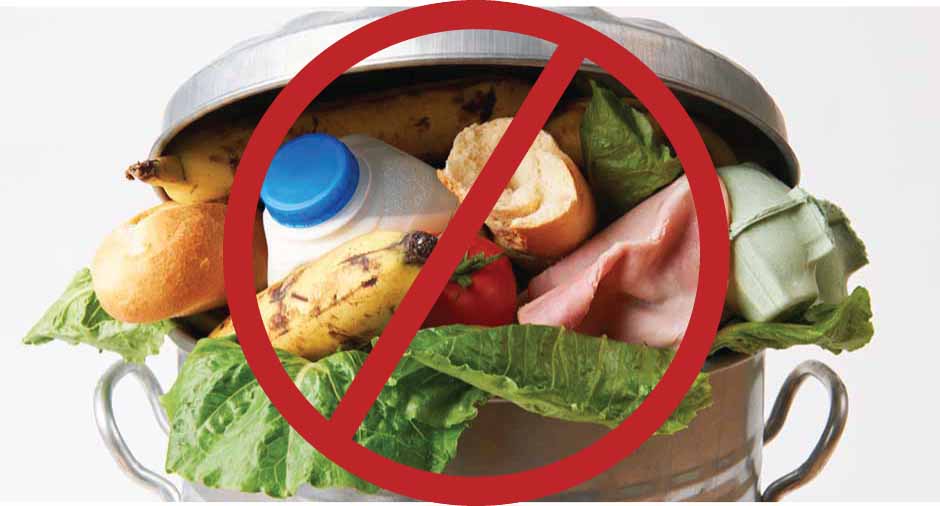
Food is wasted at all stages of the food chain not just from the consumer after purchasing, although consumer and retail waste is increasing while waste early in the food chain in middle-income countries is being reduced (3). It is stated that 30-40% of food is wasted however, this may not be accurate as this is just an estimate and not much data is collected from the losses of the developing world (5). The EU estimated that 88 million tonnes of food is lost or wasted every year and more than half of that is generated through households in the EU (7). Food waste contributes to GHGe through methane emissions from landfills and landfill emission rates differ depending on the composition of the waste, in the UK it is estimated that landfills emit 2-13 Metric tons of carbon dioxide equivalent (MtCO2e) a year of methane (10).
The EAT-LANCET wants to half all food waste and emphasises how essential this is for the global food system. They suggest doing this by improving post-harvest infrastructure, careless handling and poor scheduling can increase the risk of waste and an increase in investment into the post-harvest infrastructure could help reduce the waste risk (12). Increasing collaboration, train producers, educate individuals/the public are other suggestions from the EAT-LANCET (12). Suggestions have come from elsewhere on how we can reduce food waste. Giving incentives to reduce waste and not incentivise producing waste to farmers and companies is a great way to reduce wastage paired with educating training and providing the equipment needed could go a long way (6). Also suggested is improved storage and packaging to keep food fresher for longer this links in with the post-harvest infrastructure mentioned in the EAT-LANCET (9). Keeping a food loss index and food waste index was suggested as this would be used as a tool to measure the progress of halving food waste to see how far we have come and how far we have left to go to reach our 50% target (7). However, businesses will need help and resources to help measure food waste accurately, but this could also be a good tool to reduce waste as literature has shown food waste measurement is one of the best ways to reduce waste for a business (7). Consumers can also play their part as over purchasing and confusion about expiration dates means people throw away foods that could be unspoiled and just excess (6). Good tips on reducing food waste at home include.
- Plan your meals, have a shopping list prepared for those meals so you are only using what you are buying.
- Store food correctly and even freeze any extras to use another time.
- Meal prep, this does not just mean cook meals ahead of time you can also prepare meat and veg to then freeze or store away to use for another day.
- Think twice before throwing food away, can it still be used, is it actually spoiled.
Conclusion
The entire food system is needed to change to reduce GHGe however, this is something the governments and industries need to look into and change. Meanwhile, we can help in one section of the food system which is food waste. Reducing food waste at home will help reduce landfill emissions and the tips above are methods which we can use to reduce our food waste.
- Everything You Need to Know About Vitamin C
- Vitamin D and the Winter Months
- Everything You Need to Know About Vitamin K
- The Mediterranean Diet
- Everything You Need To Know About Vitamin E
References
- Chaudhary, A., Gustafson, D. and Mathys, A. (2018) ‘Multi-indicator sustainability assessment of global food systems’. Nature Communications, 9(848).
- Clark, M., Domingo, N., Colgan, K., Thakrar, S., Tilman, D., Lynch, J., Azevedo, I. and Hill, J. (2020) ‘Global food system emissions could preclude achieving the 1.5° and 2°C climate change targets’. Science, 370(6517) pp.705-708.
- Godfray, H., Crute, I., Haddad, L., Lawrence, D., Muir, J., Nisbett, N., Pretty, J., Robinson, S., Toulmin, C. and Whiteley, R. (2010) ‘The future of the global food system’. Philosophical Transactions of the Royal Society B: Biological Sciences, 365(1554) pp.2769-2777.
- Jones, A., Hoey, L., Blesh, J., Miller, L., Green, A. and Shapiro, L. (2016) ‘A Systematic Review of the Measurement of Sustainable Diets’. Advances in Nutrition: An International Review Journal, 7(4) pp.641-664.
- Parfitt J., Barthel M.& Macnaughton S.. 2010Food waste within food supply chains: quantification and potential for change to 2050. Phil. Trans. R. Soc. B365, 3065–3081.
- Read, Q., Brown, S., Cuéllar, A., Finn, S., Gephart, J., Marston, L., Meyer, E., Weitz, K. and Muth, M. (2020) ‘Assessing the environmental impacts of halving food loss and waste along the food supply chain’. Science of The Total Environment, 712 p.136255.
- Reynolds, C., Boulding, A., Pollock, H., Sweet, N., Ruiz, J. and Draeger de Teran, T. (2020) ‘Halving Food Loss and Waste in the EU by 2030: the major steps needed to accelerate progress’. WWF-WRAP, pp.10-66.
- Rockström, J., Edenhofer, O., Gaertner, J. and DeClerck, F. (2020) ‘Planet-proofing the global food system’. Nature Food, 1(1) pp.3-5.
- Rosenzweig, C., Mbow, C., Barioni, L., Benton, T., Herrero, M., Krishnapillai, M., Liwenga, E., Pradhan, P., Rivera-Ferre, M., Sapkota, T., Tubiello, F., Xu, Y., Mencos Contreras, E. and Portugal-Pereira, J. (2020) ‘Climate change responses benefit from a global food system approach’. Nature Food, 1(2) pp.94-97.
- Vermeulen, S., Campbell, B. and Ingram, J. (2012) ‘Climate Change and Food Systems’. Annual Review of Environment and Resources, (37) pp.195-222.
- Wakeland, W., Cholette, S. and Venkat, K. (2011) ‘Food transportation issues and reducing carbon footprint’. Food Engineering Series, pp.211-236.
- Willett, W., Rockström, J., Loken, B., Springmann, M., Lang, T., Vermeulen, S., Garnett, T., Tilman, D., DeClerck, F., Wood, A., Jonell, M., Clark, M., Gordon, L., Fanzo, J., Hawkes, C., Zurayk, R., Rivera, J., De Vries, W., Majele Sibanda, L., Afshin, A., Chaudhary, A., Herrero, M., Agustina, R., Branca, F., Lartey, A., Fan, S., Crona, B., Fox, E., Bignet, V., Troell, M., Lindahl, T., Singh, S., Cornell, S., Srinath Reddy, K., Narain, S., Nishtar, S. and Murray, C. (2019) ‘Food in the Anthropocene: the EAT–Lancet Commission on healthy diets from sustainable food systems’. The Lancet, 393(10170) pp.447-492.
 Evidence Based Nutrition
Leave a comment